Antimicrobial Susceptibility Pattern among Patients Presenting with Acute Exacerbation of COPD
Amer Zohaib1, Fahad Aman Khan2, Imran Khan2, Mukhtar Ahmad2, Talha Khalid1, Tashia Malik1, Khawar Siddique3, Sidra Munir4, Muhammad Saeed5
1 Senior Registrar, Department of Medicine, Jinnah Hospital Lahore
2 Assistant Professor, Department of Medicine, Allama Iqbal Medical College, Lahore
3 Medical Officer, Jinnah Hospital Lahore
4 Postgraduate Trainee, Histopathology Allama Iqbal Medical College Lahore
5 Manager Pathology, Medical Lab Technologist, DHQ Hospital, Mandi Bahauddin
Background: The irrational use of antibiotics in outpatient as well as indoor patients without studying the culture and sensitivity patterns may have led to resistance in common organisms causing acute exacerbation of chronic obstructive pulmonary disease. The objective of this study was to determine the culture and sensitivity patterns of bacteria in the sputum of patients presenting with acute exacerbation of chronic obstructive pulmonary disease (COPD) in our population.
Material & Methods:This cross-sectional study was conducted in the Medicine Department, Jinnah Hospital Lahore from 1st January 2018 to 25th June 2018. A total of 215 patients with acute exacerbation of COPD were collected through non-probability consecutive sampling technique. COPD was diagnosed on the basis of history, examination, chest X-ray and spirometry. Acute exacerbation was taken as an acute rise in one or more of the following; sputum volume and/or purulence, frequency and severity of cough and dyspnea. Two sputum samples were collected from each patient. Antimicrobial susceptibility testing was done as per CLSI guidelines. Data was analyzed by SPSS version 21.0. with p-value ≤ 0.05 considered as statistically significant.
Results: Among 215 selected cases, 118 (54.88%) were males and 97 (45.12%) were females. A total of 110 (51.16%) cultures were positive and 105 (48.84%) were negative for bacterial growth. Klebsiella pneumoniae (n=69; 62.72%) was the most frequent microorganism in patient’s sputum followed by Pseudomonas aeruginosa (n=21; 19.1%) and Staphylococcus aureus (n=20; 18.2%). Regarding sensitivity pattern, amikacin was found to be the most sensitive antibiotic against these organisms followed by gentamicin and ciprofloxacin.
Conclusion(s): Klebsiella pneumoniae was the most common microorganism in the sputum of patients presenting with acute exacerbation of COPD, while amikacin was reported to be most sensitive antibiotic against the microorganism.
Key words: Acute exacerbation, Antimicrobial susceptibility pattern, COPD
Chronic obstructive pulmonary disease (COPD) is a lung disease categorized by the chronic obstruction to lung airflow that affects normal breathing.1 It is emerging as the fourth communal reason of morbidity and mortality around the world triggering more than 3 million deaths every year.2 Globally, it is predicted that in 2020 it will be the third common cause of death.3 Currently the burden of this disease in Asia is greater than that in the developed Western world, both in terms of mortality and the morbidity.4
Acute exacerbation of COPD (AECOPD) is a recurrent event throughout the chronic course of this sickness.5 AECOPD is well-defined as an acute rise in one or more of the following; sputum volume and/or purulence, frequency and severity of cough and dyspnea.6 Bacterial infections are considered to be causing 30-50% of acute exacerbations.7
The occurrence of COPD is highest in elderly aged more than 65 years of age. Antibiotics are considered to improve the outcomes in management of Acute Exacerbation of COPD (AEOCOPD).8 But still there are many difficulties in the management of such patients. The problem is the emergence of resistance to antibiotics, used against common bacterial pathogens responsible for acute exacerbations. The most common cause of this problem is unnecessary use and excessive exposure of these bacterial organisms to antibiotics.9 A local study done in Karachi revealed the emergence of resistance in isolates of Klebsiella pneumoniae and Pseudomonas aeruginosa against different quinolones.10 Various studies carried out in different parts of the world have shown variation in the culture and sensitivity patterns in this group of patients.
In our population, the irrational use of antibiotics in outpatient and indoor patients without studying the culture and sensitivity patterns may have led to resistance in common organisms causing AEOCOPD. There is scarcity of data regarding the issue especially in our set up. So, this study was designed to determine the most common microorganisms causing AEOCOPD in our population followed by finding the sensitivity patterns of these bacteria against various antibiotics.
This cross-sectional study was conducted at Medicine Department of Jinnah Hospital Lahore from 1st January 2018 to 25th June 2018. The sample size was calculated as 215 using 95% confidence level, 3.5% margin of error, and 7.3% as expected percentage of Pseudomonas aeruginosa in patients with AEOCOPD.11
Non-probability consecutive sampling technique was used. Sputum samples were collected from 215 patients with acute exacerbation of COPD, after rinsing the mouth twice with plain water. Samples were collected in sterile jars, properly labeled with the name and registration number of the patient before sending to the Pathology Department of Allama Iqbal Medical College, Lahore.
Each sample was processed for bacterial culture and sensitivity as per standard microbiological techniques. Antimicrobial susceptibility testing was done as per CLSI guidelines. Newly or previously diagnosed patients of COPD both male and female, aged 25-80 years presenting in OPD or emergency departments with acute exacerbations were included in study. COPD was diagnosed on the basis of history, examination, and Chest X-ray (PA) view. Post bronchodilator FEV1/FVC ratio of < 0.70 by spirometry was taken as confirmatory for COPD. Acute exacerbation was taken as an acute rise in one or more of the following; sputum volume and/or purulence, frequency and severity of cough and dyspnea. Exclusion Criteria included (i) all cases with evidence of pneumonia or bronchiectasis (based on history, examination, and CXR) developed as a sequela of other disease, pulmonary tuberculosis (determined by 3 early morning sputum samples for AFB), cystic fibrosis (determined by CT chest) (ii) patients who were already on antibiotics (determined by taking drug history). (iii) patients with other chronic ailments like congestive cardiac failure, chronic kidney disease, chronic liver disease (based on history, examination, CXR, echocardiogram, ultrasound abdomen, renal function tests and liver function tests). Patients were divided into two age groups; 25-50 years and 51-80 years. Data was analyzed by SPSS v 21.0. Mean and standard deviation was calculated for quantitative variables such as age. For qualitative variables like gender and micro-organisms, frequency and percentages were analyzed. Chi-square test was applied to find out the association of micro-organisms with age, gender and duration of disease. P-value ≤ 0.05 was considered as statistically significant.
Among 215 selected cases, 118 (54.88%) were male and 97 (45.12%) were female with a mean age of 53.98+10.29 years. There were 83 (38.6%) patients in 25-50 years age group and 132 (61.4%) in 51-80 years age group. Regarding duration of disease, 139 (64.65%) patients had 1-6 months of disease history and 76 (35.35%) had history of more than 6 months of duration. A total of 110 (51.16%) cultures were positive and 105 (48.84%) were negative for bacterial growth. Klebsiella pneumoniae (n=69; 62.72%) was the most frequent microorganism found in patient’s sputum followed by Pseudomonas aeruginosa (n=21; 19.1%) and Staphylococcus aureus (n=20; 18.2%).
Regarding sensitivity pattern, amikacin was found to be most sensitive antibiotic. Amikacin and gentamicin showed highest sensitivity for Pseudomonas aeruginosa followed by Staphylococcus aureus and Klebsiella pneumoniae (Figure 1). Ciprofloxacin exhibited maximum sensitivity for Staphylococcus aureus followed by Pseudomonas aeruginosa and Klebsiella pneumoniae (Figure 1).
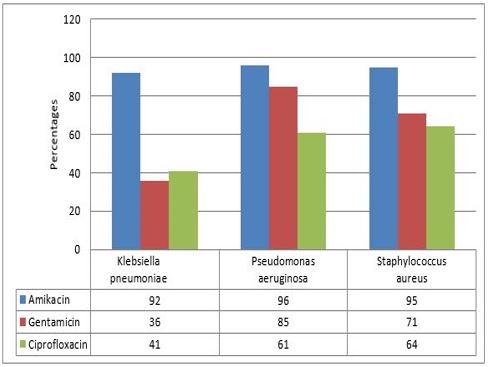
Figure 1: Frequency of antibiotics sensitivity pattern against common microorganisms (n=110).
Pseudomonas aeruginosa and Staphylococcus aureus have no significant association with age, gender and duration of disease. Klebsiella pneumonia was found to be more prevalent among males as compared to females. Association of Klebsiella pneumoniae with age and duration of disease was statistically insignificant (Table I).
Infections are the main reasons for AECOPD which result in significant mortality and morbidity.12 The present study determines the bacterial culture and sensitivity patterns in the sputum of patients presenting with AECOPD. In the light of this study we can find the most appropriate empirical antibiotic therapy for the management of such patients in future, as the choice of antibiotics should be modified according to local bacterial culture and sensitivity patterns. Likewise, studies have shown different sensitivity patterns to most commonly used drugs including penicillin, macrolides and fluoroquinolones.13
The wide use of these antibiotics in our hospitals may lead to resistance and decreased response of lower respiratory tract infections which can result in problems managing these patients.14
Table I: Association of micro-organisms with age, gender and duration of disease (n=110) |
||||||||||
Variables |
Klebsiella pneumoniae |
P-value |
Pseudomonas aeruginosa |
P-value |
Staphylococcus aureus |
P-value |
||||
+ ve |
- ve |
+ ve |
- ve |
+ ve |
- ve |
|||||
Age (years) |
25-50 |
24 |
59 |
0.42 |
8 |
75 |
1.0 |
10 |
73 |
0.27 |
51-80 |
45 |
87 |
13 |
119 |
10 |
122 |
||||
Gender |
Male |
47 |
71 |
0.007 |
2 |
106 |
0.82 |
11 |
107 |
1.0 |
Female |
22 |
75 |
9 |
88 |
9 |
88 |
||||
Duration of disease (months) |
1-6 |
25 |
51 |
0.86 |
7 |
69 |
0.841 |
8 |
68 |
0.64 |
>6 |
44 |
95 |
14 |
125 |
12 |
127 |
||||
+ ve-positive for bacterial growth; - ve-negative for bacterial growth
Moreover, the COPD patients are likely to develop resistance to antibiotics over time, especially those with productive cough. It has been reported that 23.5% patients with COPD will develop resistance to an antibiotic within the period of 28.4 months of follow-up, with sputum producers considered as having a higher risk.15 This emphasizes the significance of investigating sputum samples with determination of resistance patterns.
Our findings are supported by a study conducted in Hyderabad India in which cultures were positive for Gram-negative bacteria in 50% of the patients (n=81). The commonest bacteria were Klebsiella pneumoniae (59%) followed by Pseudomonas aeruginosa (15%), Staphylococcus aureus (13.6%), Streptococcus pneumoniae (6.8%) and Streptococcus pyogenes (4.5%), respectively.16 Similar findings reported by Pradhan et al18 who isolated Klebsiella pneumoniae in most of the culture-positive cases of chronic respiratory diseases. The gram-negative bacteria were sensitive to amikacin followed by gentamicin and ciprofloxacin. These drugs are available in most of the primary health care settings of our country and resistance could have developed by positive selection as COPD patients take antibiotics often for their symptoms.
Sputum culture is a simple method to find the causative pathogen and bacterial sensitivity pattern for AECOPD patients. It aids in screening drug-resistant microbes and the selection of superior antibacterial drugs for treatment. The results of our study are primary in our population; larger trials should be conducted to validate our findings for authentication.
Limitation:This was a single center study with a small sample size, due to time constraints and funding limitations.
Klebsiella pneumoniae followed by Pseudomonas aeruginosa and Staphylococcus aureus are the most common microorganisms in the sputum of patients presenting with an acute exacerbation of COPD, while amikacin was found to be the most sensitive antibiotic against these microorganisms.
Sputum culture and sensitivity is highly recommended in patient presenting with COPD.
- Vestbo J. COPD: definition and phenotypes. Clin Chest Med. 2014; 35(1): 1-6. Doi: 10.1016/j.ccm.2013.10.010
- Soriano JB, Abajobir AA, Abate KH, Abera SF, Agrawal A, Ahmed MB, et al. Global, regional, and national deaths, prevalence, disability-adjusted life years, and years lived with disability for chronic obstructive pulmonary disease and asthma, 1990–2015: a systematic analysis for the Global Burden of Disease Study 2015. Lancet Respir Med. 2017; 5(9): 691-706. Doi: 10.1016/S2213-2600(17)30293-X
- Mallia P, Johnston SL. Asthma-COPD Overlap Syndrome: A Review of Current Knowledge and Future Directions. Malta Med. J. 2017; 29(02): 182-89
- Landis SH, Muellerova H, Mannino DM, Menezes AM, Han MK, van der Molen T, et al. Continuing to Confront COPD International Patient Survey: methods, COPD prevalence, and disease burden in 2012–2013. Int J Chron Obstruct Pulmon Dis. 2014; 9: 597-611. Doi: 10.2147/COPD.S61854
- Jinjuvadia C, Jinjuvadia R, Mandapakala C, Durairajan N, Liangpunsakul S, Soubani AO. Trends in outcomes, financial burden, and mortality for acute exacerbation of chronic obstructive pulmonary disease (COPD) in the United States from 2002 to 2010. COPD: COPD. 2017; 14(1): 72-9. Doi: 10.1080/15412555.2016.1199669
- Freeman CM, Martinez CH, Todt JC, Martinez FJ, Han MK, Thompson DL, et al. Acute exacerbations of chronic obstructive pulmonary disease are associated with decreased CD4+ & CD8+ T cells and increased growth & differentiation factor-15 (GDF-15) in peripheral blood. Respir Res. 2015; 16(1): 94. Doi: 10.1186/s12931-015-0251-1
- Anrıverdi H, Örnek T, Erboy F, Altınsoy B, Uygur F, Atalay F, et al. Comparison of diagnostic values of procalcitonin, C-reactive protein and blood neutrophil/lymphocyte ratio levels in predicting bacterial infection in hospitalized patients with acute exacerbations of COPD. Wien Klin Wochenschr. 2015; 127(19-20): 756-63. Doi: 10.1007/s00508-014-0690-6
- Bope ET, Kellerman RD. Conn's current therapy 2016: Elsevier Health Sciences. 2015: 335-39.
- López‐Campos JL, Tan W, Soriano JB. Global burden of COPD. Respirology. 2016; 21(1): 14-23. Doi: 10.1111/resp.12660
- Nesar S, Shoaib MH, Rahim N, Rehman R. Emergence of resistance to fluoroquinolones among gram positive and gram negative clinical isolates. Pak J Pharm Sci. 2012; 25(4): 223-27. PMID: 23010009
- Kulkarni G, Chaudhary D, Bhoyar A, Dugad S. Bacteriological Profile in Sputum and their Antibiogram among the Patients of Acute Exacerbation of COPD. MVP J Med Sci. 2017; 4(2): 113-7. Doi: 10.18311/mvpjms/2017/v4i2/11048
- Vogelmeier CF, Criner GJ, Martinez FJ, Anzueto A, Barnes PJ, Bourbeau J, et al. Global strategy for the diagnosis, management, and prevention of chronic obstructive lung disease 2017 report. GOLD executive summary. Am J Respir Crit Care Med. 2017; 195(5): 557-82. Doi: 10.1164/rccm.201701-0218PP
- Rakesh G, Yuvarajan TKS. Bacterial agents causing acute exacerbations in Chronic Obstructive Pulmonary Disease (COPD) patients, their antibiograms to Extended Spectrum Beta-Lactamases (ESBL) production in a tertiary care hospital, India. Int J Curr Microbiol App Sci. 2013; 2(11): 273-82. https://www.ijcmas.com/vol-2-11/Gerard%20Rakesh,%20et%20al.pdf
- Ventola CL. The antibiotic resistance crisis: part 1: causes and threats. Pharm Ther. 2015; 40(4): 277-83. PMID: 25859123
- Nian L, Liangyi X, Gang J, Wei L, Yongliang J. Analysis on constituents and drug resistance of pathogenic bacteria causing chronic obstructive pulmonary disease. Biomed Res. 2017; 28(19): 560-68.
- Madhavi S, Rao R. Bacterial etiology of acute exacerbations of chronic obstructive pulmonary disease. J Microbiol Biotechn Res. 2012; 2(3): 440-4.
- Pradhan KC, Kar S, Nanda BK. Bacteriology of chronic respiratory disease of non-tubercular origin. Indian J Pathol Microbiol. 1979; 22(2): 133-138. PMID: 489083