Identification and Susceptibility Pattern of Various Candida Species Isolated from Different Clinical Samples in Rahim Yar Khan
Muhammad Imran Shoukat1, Kokab Jabeen2, Muhammad Shahbaz Hussain1, Muhammad Bilal Ghafoor1, Muhammad Waseem Abbas3
1Department of Pathology, Sheikh Zayed Medical College/Hospital, Rahim Yar Khan., 2 Department of Pathology, Post Graduate Medical Institute (PGMI), Lahore, 3 Department of Pathology, Quaid e Azam Medical College Bahawalpur
Objective: To isolate distinct Candida species from various clinical samples and examine their patterns of antifungal susceptibility.
Methodology: This prospective, cross-sectional study was carried out from January 2023 to December 2023 on 210 clinical samples positive for Candida, conducted in Pathology Laboratory of Sheikh Zayed Hospital, Rahim Yar Khan. The VITEK 2 compact system was utilized to identify the isolates and determine their antifungal susceptibility pattern.
Results: Candida isolates were analyzed, with Candida albicans being the most prevalent species at 64.8%. Antifungal sensitivity was highest for amphotericin, followed by caspofungin, fluconazole, flucytosine, and micafungin. Voriconazole was the least sensitive drug.
Conclusion: The study found that Candida albicans as most prevalent, followed by Candida Guilliermondii. Rare non-albicans included Candida Glabrata, Candida Krusei, Candida Tropicalis, Candida Sake and Candida Intermedia. Amphotericin has a strong antifungal sensitivity.
Keywords: Antifungal sensitivity, Candida, VITEK 2
Fungal infections are a major health problem1 with increasing incidence of sepsis.2 Patients with underlying conditions that compromise immunity, such as preterm neonates, elderly, and hospitalized patients, can show up as a variety of clinical symptoms, from mild systemic/invasive infections to serious ones.3 Candida species, including Candida albicans, are one of the most communal roots of fungal ailments globally.4 Over the past 30 to 40 years, From C. albicans infections to non albicans infections, there has been a progressive shift, accounting for more than 50% of the total infections by Candida Spp.5 Candidemia is a significant healthcare-associated infection (HCAI) in many countries, with an upsurge in the occurrence of candida infections (0.74 to 6.0/1000 hospital admissions) in underdeveloped countries.6 The higher diagnostic cost results in delays in diagnosis and treatment, leading to high mortality rates (30 to 78%) in these countries.7 Five species including C. albicans, C. parapsilosis, C. krusei, C. glabrata, and C. tropicalis are responsible for invasive infections.8 In most countries, factors like the use of antifungal drugs, outbreaks, and individual risk factors dictate the incidence of non-albicans.9 In South America, C. albicans is the most isolated Candida species, while C. parapsilosis is the widespread agent.10 In recent years, the emerging and spread of new opportunistic pathogen, C. auris, has been a concern due to its resistance to common antifungal agents, limited treatment options, and increased mortality rates (30-60%).11 Factors contributing to the overgrowth of yeast biofilms include prolonged hospital stays, total parenteral feeding, and mechanical support.12 Infections can also be exacerbated by other conditions, such as mucositis, cancer, neutropenia, organ transplants, and chronic diseases. The gastrointestinal and reproductive tracts of humans are home to the commensal opportunistic pathogen known as Candida albican.13 It has a balance of growth in the normal flora, controlled by the immune system. Any disturbance can lead to invasive or systemic fungal diseases.1414 Endogenous infections are caused by Candida's intestinal presence, while nosocomial infections are closely related to the disease's ability to make biofilms boosting their innate resistance to immunological responses and antifungal medications.15 Biofilms can grow on medical devices or host tissues, leading to the dissemination of disease to other tissues.16 Morbidity and mortality can be reduced by early detection and treatment of Candida infection.17 Due to the high frequency of non albicans infections and increasing resistance against fluconazole, the latest international guidelines strongly suggest preferring echinocandins over fluconazole as first line drugs for candidemia in all adults.18 However, antifungal susceptibility testing (AFST) of fluconazole is not being done in many patients due to limited resources and unavailability in regional laboratories.19 Untreated patients are also a major reason for high mortality.20 The increasing diversity of Candida species and their changing resistance patterns require rapid diagnosis and treatment.21 The current study designed to identify the distribution of various Candida species and their susceptibility pattern in Rahim Yar Khan.
This prospective, cross-sectional investigation was conducted at the pathology laboratory of Sheikh Zayed Hospital Rahim Yar Khan, on 210 clinical samples that tested positive for Candida between January 2023 and December 2023. The sample size was determined using n=p(1-p) (Z/E)2 with Lusitance (R) as 1.37%, required size of margin of error (E) as 1% and Confidence interval was 99%(Z). The clinical samples include urine, blood, sputum, high vaginal swabs, urinary catheter, oral swabs, broncho-alveolar lavage, nail scrapings, biopsy and corneal scrapings, processed using Bact/Alert 3D and Sabouraud Dextrose Agar (SDA) with Gentamicin. For 72 hours, the samples were inoculated and incubated at 35°C. Gram staining was performed using standard operating procedures. Using Sabouraud Dextrose Agar and colony shape and yeasty smell, 210 isolates were first recognized as fungi. The recognition of Candida species was done using germ tube tests and modern instruments to save time and cost.
The VITEK 2 compact system was used for identification of colonies from growth on SDA and AFST. Densi-Chek meters were used for inoculum suspensions and AFST. The VITEK 2 YST and AST-YS08 cards were automatically filled and incubated for at least 18 hours at 37°C. With the VITEK-2 compact system, the likelihood of accurately identifying every isolate to the species level was 90%. A standard strain of Candida albicans (ATCC 10231) was used to guarantee quality assurance.5 Patients with metabolic abnormalities and those who refused to participate were eliminated from the study, whereas male and female patients of all ages who showed signs and symptoms of fungal infections were included in the research.
This study investigated the antifungal susceptibility of various Candida species. 210 samples were isolated from clinical specimens and tested for drug sensitivity using VITEK 2 AST cards. Results showed that 67% of the cases were male and 33% female. Pediatric medical wards received the majority of positive instances, with urology, nephrology, chest illness unit, dermatology outside, and main ICU coming in second and third, respectively. The most prevalent Candida species were C. albicans, C. guilliermondii, C. ciferii, and C. parapsilosis (table I).
Table I: Prevalence of identified candida isolates from all clinical samples (n=210) |
||
Name of the Candida Isolate |
No of Isolate Identified |
Percentage Distribution |
C. albicans |
134 |
63.8% |
C. guilliermondii |
37 |
17.6% |
C. ciferii |
16 |
7.6% |
C. parapsilosis |
14 |
6.67% |
*Others |
5 |
2.3% |
Unspecified/ invalid |
4 |
1.9% |
Table II: Overall susceptibility of antifungal drugs against all candida species |
||
Antifungal Drug |
MICs |
Sensitivity |
Amphotericin B |
≤0.25 >16 µg/ml |
92.77% |
Caspofungin |
≤0.125 >8 µg/ml |
90% |
Fluconazole |
≤0.5 >64µg/ml |
89% |
Flucytosine |
≤1 >64µg/ml |
83.11% |
Micafungin |
≤0.06 >8µg/ml |
81.67% |
Voriconazole |
≤0.125 >8µg/ml |
67.6% |
Caspofungin had the best susceptibility against C. albicans and C. glabrata, followed by Amphotericine B, Fluconazole, and Micafungin (chart 1 & 2). Overall, Amphotericin had the highest sensitivity to all Candida species, followed by Caspofungin, Fluconazole, and Micafungin. Voriconazole was the least sensitive drug (table II).
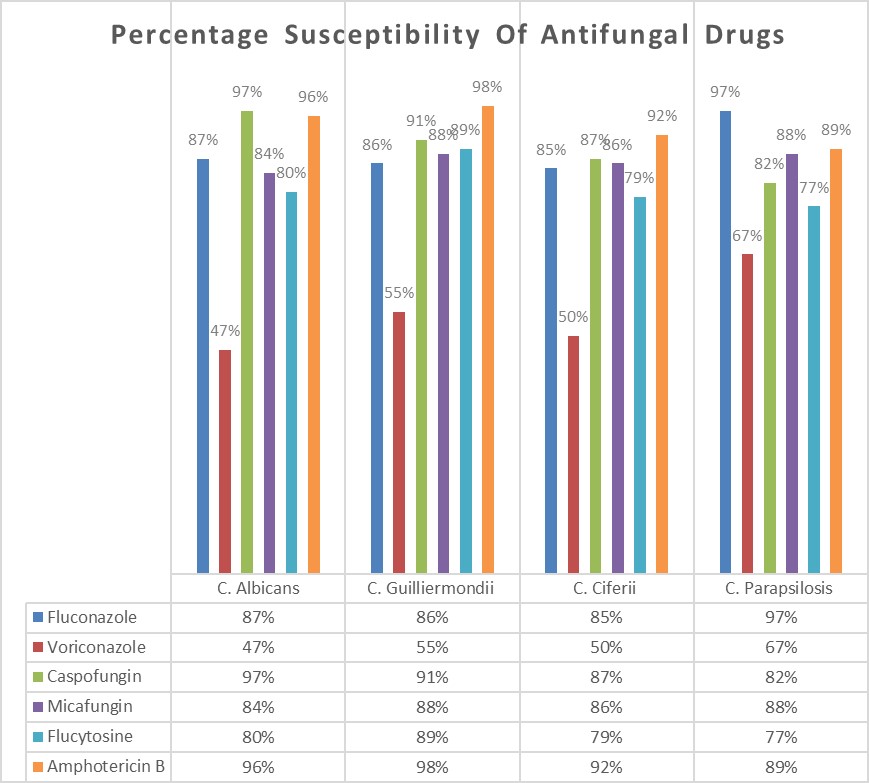
Chart 1: Candida Isolates' Antifungal Susceptibility Pattern (A)
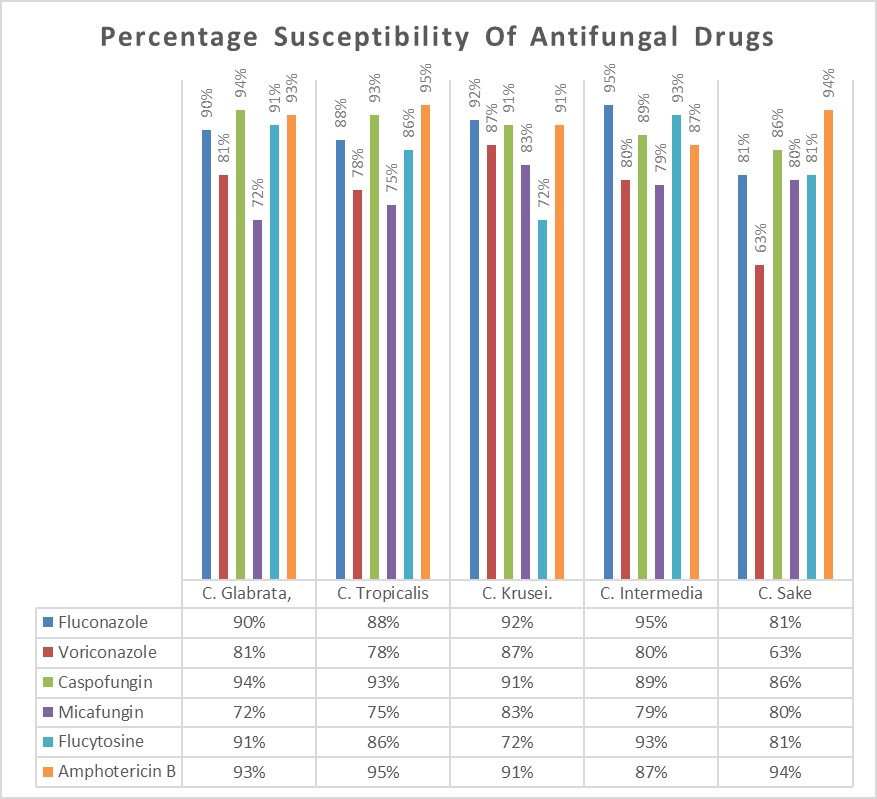
Chart 2: Pattern of Candida Isolate Susceptibility to Antifungals (B)
Fungal illnesses resulting from Candida albicans and non-albicans have emerged as a significant public health issue, impacting 75% of females at some point in their lives.22 Antifungal resistance due to comorbid and immune suppression is increasing.23 The 210 samples were isolated from clinical samples, and C. albicans were identified using germ tube tests, while non-albicans were tested using VITEK 2 compact systems and the results are discussed in relation to other researchers' work. This study analyzed 210 clinical samples from various departments of SZH RYK, focusing on the distribution of Candida isolates. Most Candida isolates were found in urine samples (49.52%), blood samples (24.76%), sputum (10.48%), high vaginal swabs (5.71%), urinary catheter (3.33%), and oral swabs (2.38%). The frequency distribution of patients of candidiasis was mainly male (67%), with females (57%) more affected than males (43%). The frequency of Candida species decreased with age, with more chances of candidiasis in older patients by non- C.albicans. Among the 210 Candida isolates, C. albicans was the most prevalent species, followed by C. guilliermondii, C. ciferii, and C. parapsilosis (14, 6.67%). Other distinguished species were C. glabrata, C. tropicalis, C. krusei, C. intermedia and C sake. Similar results were observed in a study, which was done by Khairat et all in 2021.24 The most common non-albicans were C. parapsilosis (21.7%), C. tropicalis (15.5%), and C. glabrata (13.9%). Few other studies suggest that C. parapsilosis was (28.6%) the most prevalent non albicans. 10 Caspofungin had the best susceptibility against C. albicans (97%), followed by Amphotericine B (98%), Fluconazole (97%). Voriconazole (67.6%) was the least effective in vitro activity. Rodrigues et al. reported C. glabrata emergence with high MICs to fluconazole and variconazole,2 in another study while non-albicans showed higher resistance to fluconazole and variconazole, while Amphotericin B was sensitive to non-albicans.25 96% of the Candida isolates were susceptible to both Micafungin and Caspofungin, however Micafungin worked better than Caspofungin. Similar to the findings of this investigation, 86.2% of yeasts were found to be susceptible to flucytosine in other related studies.5
The study found C. albicans to be the most prevalent species, followed by C. guilliermondii (17.6%). Rare non-albicans included C. glabrata, C. tropicalis, C. krusei, C. intermedia and C. sake. The VITEK 2 compact system showed minimal invalid results, but insufficient resistance isolates. Amphotericin had the highest antifungal sensitivity, with low drug resistance.
Recommendation: A multidimensional strategy for controlling emerging fungal infections involves early identification, surveillance, registration, strict SOPs, training, capacity building, centralized networking, and modern technology for effective treatment.
- Pereira R, dos Santos Fontenelle R, de Brito E, de Morais S. Biofilm of Candida albicans: formation, regulation and resistance. Journal of Applied Microbiology. 2021;131(1):11-22. https://doi.org/10.1111/jam.14949
- Rodrigues LS, Motta FA, Picharski GL, Vasconcelos TM, Riccieri MC, Dalla-Costa LM. Invasive candidiasis: risk factor for mortality in a pediatric tertiary care hospital in south of Brazil. Medicine. 2019;98(23). https://doi.org/ 10.1097/MD.0000000000015933
- Shaukat S, Mirza IA, Irfan R, Sarwar M, Khurshid U, Hussain W. Invasive fungal disease in critically ill and Immunocompromised patients. JPMA. The Journal of the Pakistan Medical Association. 2022 Dec 1;72(12):2438-42. https://doi.org/10.47391/jpma.4704
- Gharehbolagh SA, Fallah B, Izadi A, Ardestani ZS, Malekifar P, M. Borman A, et al. Distribution, antifungal susceptibility pattern and intra-Candida albicans species complex prevalence of Candida africana: A systematic review and meta-analysis. PloS one. 2020;15(8):e0237046. https://doi.org/10.1371/journal.pone.0237046
- Seyoum E, Bitew A, Mihret A. Distribution of Candida albicans and non-albicans Candida species isolated in different clinical samples and their in vitro antifungal suscetibity profile in Ethiopia. BMC infectious diseases. 2020;20(1):1-9. https://doi.org/10.1371/journal.pone.0237046
- Qin J, Yang H, Shan Z, Jiang L, Zhang Q. Clinical efficacy and safety of antifungal drugs for the treatment of Candida parapsilosis infections: a systematic review and network meta-analysis. Journal of Medical Microbiology. 2021;70(10). https://doi.org/10.1099/jmm.0.001434
- Cortés JA, Ruiz JF, Melgarejo-Moreno LN, Lemos EV. Candidemia in Colombia. Biomédica. 2020;40(1):195-207. https://doi.org/10.7705/biomedica.4400
- Borman AM, Johnson EM. Name changes for fungi of medical importance, 2018 to 2019. Journal of Clinical Microbiology. 2021;59(2):e01811-20. https://doi.org/10.1128/jcm.01811-20
- Thomaz DY, de Almeida Jr JN, Sejas ON, Del Negro GM, Carvalho GO, Gimenes VM, et al. Environmental clonal spread of azole-resistant Candida parapsilosis with Erg11-Y132F mutation causing a large candidemia outbreak in a Brazilian Cancer Referral Center. Journal of Fungi. 2021;7(4):259. https://doi.org/10.3390/jof7040259
- Vigezzi C, Icely PA, Dudiuk C, Rodriguez E, Miró MS, Castillo G, et al. Frequency, virulence factors and antifungal susceptibility of Candida parapsilosis species complex isolated from patients with candidemia in the central region of Argentina. Journal de Mycologie Médicale. 2019;29(4):285-91. https://doi.org/org/10.1016/j.mycmed.2019.100907
- Allert S, Schulz D, Kämmer P, Großmann P, Wolf T, Schäuble S, et al. From environmental adaptation to host survival: Attributes that mediate pathogenicity of Candida auris. Virulence. 2022;13(1):191-214. https://doi.org/org/10.1080/21505594.2022.2026037
- Lionakis MS, Netea MG. Candida and host determinants of susceptibility to invasive candidiasis. PLoS pathogens. 2013;9(1):e1003079. https://doi.org/10.1371/journal.ppat.1003079
- d'Enfert C, Kaune A-K, Alaban L-R, Chakraborty S, Cole N, Delavy M, et al. The impact of the Fungus-Host-Microbiota interplay upon Candida albicans infections: current knowledge and new perspectives. FEMS Microbiology Reviews. 2021;45(3):fuaa060. https://doi.org/10.1093/femsre/fuaa060
- Pfaller MA, Castanheira M. Nosocomial candidiasis: antifungal stewardship and the importance of rapid diagnosis. Medical mycology. 2016;54(1):1-22. https://doi.org/org/10.1093/mmy/myv076
- Motoa G, Muñoz JS, Oñate J, Pallares CJ, Hernández C, Villegas MV. Epidemiology of Candida isolates from intensive care units in Colombia from 2010 to 2013. Revista iberoamericana de micologia. 2017;34(1):17-22.https://doi.org/10.1016/j.riam.2016.02.006
- Aguilar G, Araujo P, Lird G, Insaurralde S, Kawabata A, Ayala E, et al. Identificación y perfil de sensibilidad de Candida spp. aisladas de hemocultivos en hospitales de Paraguay. Revista Panamericana de Salud Pública. 2020;44. https://doi.org/10.26633/RPSP.2020.34
- Morgan J, Meltzer MI, Plikaytis BD, Sofair AN, Huie-White S, Wilcox S, et al. Excess mortality, hospital stay, and cost due to candidemia: a case-control study using data from population-based candidemia surveillance. Infection control & hospital epidemiology. 2005;26(6):540-7. https://doi.org/ org/10.1086/502581
- Clancy CJ, Nguyen MH. Finding the “missing 50%” of invasive candidiasis: how nonculture diagnostics will improve understanding of disease spectrum and transform patient care. Clinical infectious diseases.2013;56(9):1284-92. https://doi.org/10.1093/cid/cit006
- Wisplinghoff H, Bischoff T, Tallent SM, Seifert H, Wenzel RP, Edmond MB. Nosocomial bloodstream infections in US hospitals: analysis of 24,179 cases from a prospective nationwide surveillance study. Clinical infectious diseases. 2004;39(3):309-17. https://doi.org/10.1086/421946
- Kobayashi T, Marra AR, Schweizer ML, Ten Eyck P, Wu C, Alzunitan M, et al., editors. Impact of infectious disease consultation in patients with candidemia: a retrospective study, systematic literature review, and meta-analysis. Open forum infectious diseases; 2020: Oxford University Press US. https://doi.org/10.1093/ofid/ofaa270
- Tasneem U, Siddiqui MT, Faryal R, Shah AA. Prevalence and antifungal susceptibility of Candida species in a tertiary care hospital in Islamabad, Pakistan. J Pak Med Assoc. 2017;67(7):986-91.
- Poulain D. Candida albicans, plasticity and pathogenesis. Critical reviews in microbiology. 2015;41(2):208-17. https://doi.org/org/10.3109/1040841X.2013.81394
- Duzgol M, Boncuoglu E, Kiymet E, Akaslan Kara A, Erdem M, Odaman Al I, et al. Evaluation for Metastatic Candida Focus and Mortality at Candida-associated Catheter-related Bloodstream Infections at the Pediatric Hematology-oncology Patients. Journal of Pediatric Hematology/Oncology. 2022;44(3):e643-e8. https://doi.org/10.1097/MPH.0000000000002197
- Khairat SM, Anany MG, Ashmawy MM, Hussein AFA. Setting a Protocol for Identification and Detecting the Prevalence of Candida auris in Tertiary Egyptian Hospitals Using the CDC Steps. Open Access Macedonian Journal of Medical Sciences. 2021;9(A):397-402. https://doi.org/10.3889/oamjms.2021.6095
- Zuo Xs, Liu Y, Cai X, Zhan L, Hu K. Association of different Candida species with catheter‐related candidemia, and the potential antifungal treatments against their adhesion properties and biofilm‐forming capabilities. Journal of clinical laboratory analysis. 2021;35(4):e23738. https://doi.org/10.1002/jcla.23738

An Official Publication of
Islamabad Medical & Dental College
Volume 13 Issue 2
Address of Correspondence
Muhammad Bilal Ghafoor
Email:
drbilal.ryk@gmail.com
Authors’ Contribution: 1,2Conception; Literature research; manuscript design and drafting; 3,4 Critical analysis and manuscript review; 5Data analysis; Manuscript Editing.
Cite this article. Shoukat MI, Jabeen K, Hussain MS, Ghafoor MB, Abbas MW. Identification and Susceptibility Pattern of Various Candida Species Isolated from Different Clinical Samples in Rahim Yar Khan. J Islamabad Med Dental Coll. 2024; 13(2): 306-311.
DOI: https://doi.org/10.35787/jimdc.v13i2.1250