Association of HbA1C Level with Extent of Acute Myocardial Infarction and Short-Term Mortality in Patients without Known Diabetes
Shahnawaz Panhwar1, Ghulam Fareed2, Shahid Hussain Memon1, Muhammad Khan Soomro2, Tahir Hussain Soomro3, Abdul Ghaffar Memon4
1Department of Cardiology, Liaquat University of Medical and Health Sciences Hyderabad, 2Department of Cardiology, Peoples University of Medical and Health Sciences, Nawabshah, 3Department of Cardiology, Ghulam Muhammad Mahar Medical College Sukkur, 4Department of Cardiology, Suleman Roshan Medical College Tando Adam
Objective: To determine the prognostic value of HbA1c levels in relation to the extent of acute myocardial infarction (MI) and short-term mortality in patients without known diabetes.
Methodology: A prospective cohort study was conducted in the Department of Cardiology at Liaquat University Hospital, Hyderabad, over a period of one year, from February 2020 to January 2021. All patients aged 20-75 years, of both genders, with acute myocardial infarction (MI), including STEMI and NSTEMI, were included. MI diagnosis was based on ECG findings and serum cardiac biomarkers such as Troponin-T and Troponin-I. Blood samples were collected from all patients to assess HbA1c levels. Echocardiography was performed to categorize patients according to left ventricular ejection fraction. Short-term mortality was assessed in all patients. Data analysis was conducted using SPSS version 22.0.
Results: A total of 377 patients with acute myocardial infarction (MI) were studied; their mean age was 50.42 ± 11.71 years. The majority of the study subjects were male (83.0%), while females accounted for 17.0%. Among all cases, 59.4% had an HbA1c level of <5.8, and 40.6% had an HbA1c level of >5.8. Most study subjects (62.9%) had a left ventricular ejection fraction of <40%. The majority of the cases (77.7%) were diagnosed with STEMI, while NSTEMI was observed in 22.3% of the cases. Overall short-term mortality (30 days) was 14.3%, which was significantly associated with HbA1c level of >5.8 (p-<0.05).
Conclusion: Overall short-term mortality (30 days) was 14.3%. Higher HbA1c was observed to be a potential indicator for short term mortality among patients of acute coronary syndrome as well as a predictor for short-term mortality in ACS patients without known diabetes mellitus.
Keywords: Acute MI, Hba1c, Unknown diabetes, 30 days mortality
Acute myocardial infarction (AMI) is a leading cause of both mortality and morbidity worldwide.1 About 600,000 Americans are admitted to hospitals each year due to an initial episode of acute MI.1,2 Cardiovascular disease (CVD) is predicted to become twice as common among South Asian populations over the next 20 years.3,4 Ischemic heart disease (IHD) is a type of cardiovascular disease (CVD), with acute myocardial infarction (AMI) being one of its most common manifestations.3 The two clinical types of AMI are ST-elevation myocardial infarction (STEMI) and non-ST-elevation myocardial infarction (NSTEMI).3 The 30-day survival rate has emerged as a important indicator of quality care, and recent findings have shown that the 30-day survival rate for acute myocardial infarction (AMI) ranges from 88.0% to 93.5% when calculated using the hospital catchment method.5 Type II diabetes is a significant contributing factor to cardiovascular diseases, particularly acute myocardial infarction. Diabetes increases a person's risk of heart attack compared to non-diabetics. Individuals with diabetes are more likely to experience both short- and long-term mortality following a heart attack than those without the disease. Elevated HbA1c levels serve as a potential marker for increased risk of in-hospital mortality among patients with acute coronary syndrome (ACS) and as a predictor of short-term mortality in ACS patients who do not have a history of diabetes mellitus (DM) and are not diagnosed with DM.6 Each 1% increase in HbA1c is associated with a 30% rise in all-cause mortality and a 40% increase in cardiovascular disease (CVD)-related mortality in individuals with diabetes. Microvascular complications are known to occur long before a person develops overt diabetes mellitus (DM). Hyperglycemia accelerates atherosclerosis by promoting the formation of glycated proteins and products that impair endothelial function, leading to macrovascular complications. HbA1c can be used as a biomarker for glycemic control. Recent studies have also linked elevated HbA1c levels to increased CVD risk and mortality.7 Multiple investigations have demonstrated that even mild deviations in glucose control (below the diagnostic threshold for diabetes) are associated with an increased risk of cardiovascular disease (CVD), extending the link between adverse CVD outcomes and dysglycemia.6,7 Therefore, both non-diabetics with stress hyperglycemia and diabetics with uncontrolled blood glucose have a poorer prognosis in cases of acute coronary syndrome (ACS). However, the impact of recently elevated blood glucose, as assessed by HbA1c, has not consistently been recognized as a poor prognostic indicator. There is a correlation between high blood sugar levels upon admission and an increased risk of adverse outcomes, such as cardiogenic shock, congestive heart failure (CHF), and mortality.8,9 Despite numerous studies exploring this intriguing topic, conclusive findings remain elusive. Therefore, this study aims to investigate the potential association between HbA1c levels and the severity of acute myocardial infarction (AMI), as well as short-term mortality. If a significant correlation between HbA1c levels and both short-term mortality and AMI severity is established, it would support the early and effective management of HbA1c levels to mitigate morbidity and mortality risks.
A prospective cohort study was conducted in the Department of Cardiology at Liaquat University Hospital, Hyderabad, over a one-year period from February 2020 to January 2021, following approval of the study protocol and until the target sample size was achieved. Sample size calculation was performed using Raosoft software with a 95% confidence interval and a 5% margin of error, resulting in a sample size of n = 377. Non-probability convenience sampling was used. Patients with acute myocardial infarction (STEMI and NSTEMI), aged 20 to 75 years, of both genders, were included. Patients who did not consent to participate, those with a history of AMI, congestive heart failure, valvular heart diseases, congenital heart diseases, or other severe morbidities with poor prognosis such as chronic liver disease (CLD), chronic kidney disease (CKD), and carcinoma, were excluded. The study was conducted with approval from the ethical committee of Liaquat University of Medical and Health Sciences (LUMHS). Subjects were selected from the cardiology department's inpatient ward at Liaquat University Hospital, Hyderabad. Following consent, a brief history of the condition’s duration was collected. Patients meeting the inclusion criteria were enrolled in the study. Detailed records were kept of the duration, frequency, and intensity of chest discomfort, exercise tolerance, risk factors associated with MI, and any history of prior myocardial infarction. Diagnosis of MI was based on ECG and blood cardiac biomarkers, including Troponin-T and Troponin-I. Blood samples were collected from each patient to determine HbA1c levels. All patients underwent echocardiography and were categorized into three groups based on their left ventricular ejection fraction (LVEF): LVEF > 50%, LVEF 49% to 41%, and LVEF ≤ 40%. Short-term mortality was assessed in all cases and was analysed in relation to HbA1c levels, which were categorized into two groups: HbA1c < 6.8% and HbA1c > 5.8%. Data were recorded in a proforma for analysis. After data collection, analysis was conducted using Statistical Package for Social Sciences (SPSS) software, Version 22.0.
A total of 377 patients with acute myocardial infarction (MI) were studied, with a mean age of 50.42 ± 11.71 years. Males were the majority, accounting for 83.0% of the patients, while females made up 17.0%. Among all patients, 59.4% had an HbA1c level of <5.8, and 40.6% had an HbA1c level of >5.8. Most study subjects (62.9%) had a left ventricular ejection fraction (LVEF) of <40%, 30.8% had an LVEF of 41-49%, and 6.3% had an LVEF of >50%. The majority of cases (77.7%) had ST-elevation myocardial infarction (STEMI), while non-ST elevation myocardial infarction (NSTEMI) was observed in 22.3% of the cases. Table I. The data suggest potential correlations between HbA1c levels, the severity of myocardial infarction (MI), and short-term mortality, with some associations showing statistical significance (p < 0.05). Table II. Overall short-term mortality (30 days) was found 14.3% as showed in figure 1In this study, short-term mortality (30 days) was statistically significant according to gender, left ventricular ejection fraction, and type of myocardial infarction (MI) (p < 0.05). Table III.
Table: I Gender distribution of the patients n=377 |
||
Variables |
Frequency |
Percent |
Gender |
||
Male |
313 |
83.0 |
Female |
64 |
17.0 |
HbA1c |
||
>5.8 |
153 |
40.6 |
<5.8 |
224 |
59.4 |
LVEF |
||
<40% |
237 |
62.9 |
41 to 49% |
116 |
30.8 |
>50% |
24 |
06.4 |
Types of MI |
||
ST elevation MI |
293 |
77.7 |
NST elevation MI |
84 |
22.3 |
Table: II Association of HbA1c level with severity of acute MI and short-term mortality n=377 |
||||
Variables |
Hba1c |
Total |
p-value |
|
>5.8 |
<5.8 |
|||
LVEF |
||||
<40% |
107 |
130 |
237 |
0.059 |
41 to 49% |
39 |
77 |
116 |
|
>50 |
7 |
17 |
24 |
|
Total |
153 |
224 |
377 |
|
30 days mortality |
||||
Yes |
29 |
25 |
54 |
0.034 |
No |
124 |
199 |
323 |
|
Total |
153 |
224 |
377 |
|
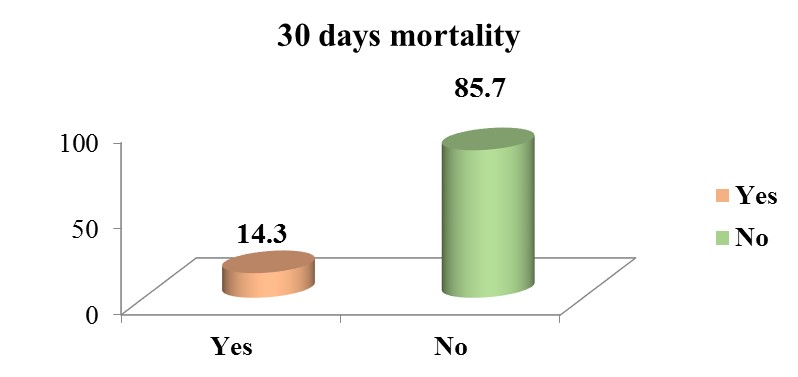
Figure:1 Patient’s distribution according to 30 days mortality n=377
Table: III Short term mortality according to gender, HbA1c and LVEF n=377 |
||||
Variables |
30 days mortality |
p-value |
||
Yes |
No |
|||
Gender |
Male |
36(66.7%) |
277(85.8%) |
0.001 |
Female |
18(33.3%) |
46(14.2%) |
||
LVEF |
<40% |
44(81.5%) |
193(59.8%) |
0.001 |
41 to 49% |
10(18.5%) |
106(32.8%) |
||
>50 |
00 |
24(7.4%) |
||
Type of MI |
NST elevation |
27(50.0%) |
57(82.4%) |
0.001 |
ST elevation |
27(50.0%) |
266(17.6%) |
||
Ischemic heart disease (IHD) is the leading cause of mortality globally, and its incidence is rising, although there are variations between different nations.10 Because of increased use of primary percutaneous coronary intervention (PCI), modern antithrombotic medication, and secondary preventive strategies, both long- and short-term mortality related to ST-elevation myocardial infarction (STEMI) have decreased significantly in recent decades.10,11 Despite this, mortality rates remain high, with an in-hospital death rate of 4% to 12% among unselected STEMI patients. In this study, short-term mortality (1 month) was found to be 14.3%.10 Similarly, Aziz F et al12 found that total mortality in STEMI patients was 5.4% in-hospital, 8.1% at 30 days, and 14.4% after one year. However, McNamara RL et al13 reported an in-hospital mortality rate of 4.6%. The short-term prognosis of out-of-hospital cardiac arrest (OHCA) patients has improved in the past 15 years due to extensive efforts to enhance both pre-treatment and during hospitalization. 14,15 Despite this, most patients die following OHCA, either before hospitalization due to a lack of return of spontaneous circulation (ROSC) or in-hospital due to cerebral or other complications following ROSC.16
In this study, the mean age of the patients was 50.42 ± 11.71 years, and the majority were male (83.0%). In contrast, McNamara RL et al13 reported a mean age of 64.6 ± 13.8 years, with males comprising 34.8% of the study population. Aziz F et al12 noted that 87% of the subjects were men in their study. Kvakkestad KM and colleagues15 found that the average age of the subjects was 63.6 ± 12.5 years, with a majority being male (80.0%). Similarly, in another study reported that out of 74,389 acute myocardial infarction (AMI) admissions, 30.0% were women. In this study, the mortality rate was higher among males compared to females. However, when mortality rates during hospitalization were adjusted for medical history, personal history, age, and initial clinical outcomes, Fabijanić D et al17 found that being female is an independent predictor of mortality during hospitalization following the first AMI, consistent with some previous research. On the other hand, some researchers argue that after accounting for baseline differences, being female has not been independently associated with an increased in-hospital mortality rate compared to males.
Because variations in mortality risk between women and men were independent of baseline data, it is plausible that other factors are influencing the prognosis. Moshki M et al18 stated that mortality during hospitalization was higher among females with acute myocardial infarction (AMI) compared to males (10.4% vs. 8.6%). This finding aligns with Anderson and Pepine's results, which indicated that the odds ratio (OR) of in-hospital mortality is approximately 2.65 times higher for females with AMI compared to males.14,17 Compared to males, the female gender was associated with a significantly higher likelihood of mortality, stroke, MI, urgent revascularization, or definite acute abrupt vessel closure. Even though this discrepancy was reduced in a multivariable model, gender remained associated with all-cause mortality at 30 days.19 Landmark analysis of events that occurred within the first 2 days and between 2 to 30 days revealed that 38% of females and 36% of males who did not survive the first month died within the first 2 days.19
In this study, short-term mortality was significantly higher among patients with HbA1c >5.8% and an ejection fraction <40%. In contrast to our study, Kapil et al20 showed a positive predictive association between cardiovascular disease (CVD) and HbA1c (p = 0.001). Furthermore, another study from North Eastern India, which employed the SYNTAX score, found a highly significant link between higher HbA1c levels and the SYNTAX score.21 Many studies have been conducted over the years to uncover predictors of coronary artery disease (CAD); however, in recent decades, the HbA1c level among diabetics has been explored as a potential predictor. In a recent policy statement, the American Diabetes Association (ADA) suggested that reducing HbA1c may be associated with a decrease in microvascular and neuropathic complications, and possibly macrovascular consequences of DM.22 Similarly, research associating the severity of CAD and CVD mortality with HbA1c values has been regularly conducted in non-diabetics since 2004.23 Furthermore, these studies show that even when HbA1c levels are within the standard range, the risk of developing CAD is greatly increased.24 Several biological mechanisms have been suggested to elucidate a potential causal link between HbA1c and heightened mortality in patients with acute coronary syndrome (ACS).6 A correlation between baseline plasma fibrinogen levels and HbA1c levels in ACS patients plays a crucial role in coronary thrombosis, aligning with the finding that elevated HbA1c levels were significantly associated with an increased risk of complications in ACS patients.6,25,26
As per study conclusion overall short-term mortality (30 days) was noted to be 14.3%. Higher HbA1c was observed to be a potential indicator for short term mortality among patients of acute coronary syndrome as well as a predictor for short-term mortality in ACS patients without known diabetes mellitus. Further large-scale studies are needed on this subject.
- Yu YY, Zhao BW, Ma L, Dai XC. Association between out-of-hour admission and short-and long-term mortality in acute myocardial infarction: a systematic review and meta-analysis. Frontiers in Cardiovascular Medicine. 2021 Dec 14;8:752675. https://doi.org/10.3389/fcvm.2021.752675
- Benjamin EJ, Virani SS, Callaway CW, Chamberlain AM, Chang AR, Cheng S, et al.. Heart disease and stroke statistics-2018 update: a report from the American heart association. Circulation. 2018;137:e67–49, https://doi.org/10.1161/cir.0000000000000558
- Baloch F, Arshad A, Sethi SM, Tai JM. Acute myocardial infarction from a lower-middle income country—A comprehensive report on performance measures and quality metrics using National Cardiovascular Data Registry. Plos one. 2023 Nov 15;18(11):e0294396. https://doi.org/10.1371/journal.pone.0294396
- Saleh M, Ambrose JA. Understanding myocardial infarction. F1000Research. 2018;7. https://doi.org/10.12688/f1000research.15096.1
- Norum J, Hansen TM, Hovland A, Balteskard L, Haug B, Olsen F, Trovik T. Calculating the 30-day survival rate in acute myocardial infarction: should we use the treatment chain or the hospital catchment model?. Heart International. 2017;12(1):heartint-5000238. https://doi.org/10.5301/heartint.5000238
- Pan W, Lu H, Lian B, Liao P, Guo L, Zhang M. Prognostic value of HbA1c for in-hospital and short-term mortality in patients with acute coronary syndrome: a systematic review and meta-analysis. Cardiovascular diabetology. 2019 Dec;18:1-2. https://doi.org/10.1186/s12933-019-0970-6
- Gosavi S, Karande S, Raut K. HbA1c: A Marker for Severity of Acute Myocardial Infarction. IAIM, 2016; 3(5): 89-93
- Ertem AG,Bagbanci H, Kilic H et al. Relationship between HbA1C levels and coronary artery severity in non-diabetic acute coronary syndrome patients. Archives of Turkish Soci-ety of Cardiology 2013;41(5):389-95. http://dx.doi.org/10.1016/S0167-5273(13)70394-2
- KnudsenEC, Sejieflot I, Abdelnour M et al. Abnormal glucose regulation in patients with acute ST elevation Myocardial infarction. Cardiovascular Diabetology 2009; 8:6-10. https://doi.org/10.1186%2F1475-2840-8-6
- Pascual I, Hernandez-Vaquero D, Almendarez M, Lorca R, Escalera A, Díaz R, Alperi A, Carnero M, Silva J, Morís C, Avanzas P. Observed and expected survival in men and women after suffering a STEMI. Journal of clinical medicine. 2020 Apr;9(4):1174. https://doi.org/10.3390%2Fjcm9041174
- Ibanez, B.; Stefan James, S.; Agewall, S.; Antunes, M.J.; Bucciarelli-Ducci, C.; Bueno, H.; Caforio, A.L.P.; Crea, F.; Goudevenos, J.A.; Halvorsen, S.; et al. 2017 ESC Guidelines for the management of acute myocardial infarction in patients presenting with ST-segment elevation. Eur. Heart J. 2018, 39, 119–177. https://doi.org/10.1093/eurheartj/ehx393
- Aziz F, Malek S, Ibrahim KS, Raja Shariff RE, Wan Ahmad WA, Ali RM, Liu KT, Selvaraj G, Kasim S. Short-and long-term mortality prediction after an acute ST-elevation myocardial infarction (STEMI) in Asians: A machine learning approach. PloS one. 2021 Aug 2;16(8):e0254894. https://doi.org/10.1371/journal.pone.0254894
- McNamara RL, Kennedy KF, Cohen DJ, Diercks DB, Moscucci M, Ramee S, Wang TY, Connolly T, Spertus JA. Predicting in-hospital mortality in patients with acute myocardial infarction. Journal of the American College of Cardiology. 2016 Aug 9;68(6):626-35. https://doi.org/10.1016/j.jacc.2016.05.049
- WongMK, MorrisonL J, QiuF,AustinPC,Cheskes S, DorianP, et al. Trends inshortand long-term survival among out-of-hospital cardiac arrest patients alive at hospital arrival. Circulation 2014;130:1883–90. https://doi.org/10.1161/circulationaha.114.010633
- Wissenberg M, Folke F, Hansen CM, Lippert FK, Kragholm K, Risgaard B, et al. Survival after out-of-Hospital cardiac arrest in relation to age and early identification of patients with minimal chance of long-term survival. Circulation 2015;131:1536–45. https://doi.org/10.1161/circulationaha.114.013122
- Kvakkestad KM, Sandvik L, Andersen GØ, Sunde K, Halvorsen S. Long-term survival in patients with acute myocardial infarction and out-of-hospital cardiac arrest: a prospective cohort study. Resuscitation. 2018 Jan 1;122:41-7. https://doi.org/10.1016/j.resuscitation.2017.11.047
- Fabijanic D, Culic V, Bozic I, Miric D, Stipic SS, Radic M, Vucinovic Z. Gender differences in in-hospital mortality and mechanisms of death after the first acute myocardial infarction. Annals of Saudi medicine. 2006 Nov;26(6):455-60. https://doi.org/10.5144%2F0256-4947.2006.455
- Moshki M, Zareie M, Hashemizadeh H. Sex differences in acute myocardial infarction. Nurs Midwifery Stud. 2015;4(1):e22395. https://doi.org/10.17795%2Fnmsjournal22395
- Venetsanos D, Sederholm Lawesson S, Alfredsson J, et al. Association between gender and short-term outcome in patients with ST elevation myocardial infraction participating in the international, prospective, randomised Administration of Ticagrelor in the catheterisation Laboratory or in the Ambulance for New ST elevation myocardial Infarction to open the Coronary artery (ATLANTIC) trial: a prespecified analysis. BMJ Open 2017;7:e015241. https://doi.org/10.1136/bmjopen-2016-015241
- Kapil C, Rajasekhar D, Vanjakshamma V, Kranthichaitanya D, Narendra CH: Role of CIMT, eGFR, and serum HbA1c in predicting CAD in non-diabetic patients undergoing elective coronary angiography. World J Cardiovasc Dis. 2018, 8:10. https://doi.org/10.4236/wjcd.2018.81001
- Corpus RA, O'Neill WW, Dixon SR, Timmis GC, Devlin WH: Relation of hemoglobin A1c to rate of major adverse cardiac events in nondiabetic patients undergoing percutaneous coronary revascularization. American J Cardiol. 2003, 92:1282-1286. https://doi.org/10.1016/j.amjcard.2003.08.008
- American Diabetes Association: Nutrition recommendations and interventions for diabetes . Diabetes Care. 2008, 31:61-78. https://doi.org/10.2337/dc08-S061
- Bastawesy R, Abdelmoniem A, Abdelkader M, Ismaiel R: The relation between glycated hemoglobin and severity of coronary artery disease in non-diabetic patients with acute coronary syndrome. Int J Adv Res. 2016, 4:2393-2399. http://dx.doi.org/10.21474/IJAR01/2663
- Verdoia M, Schaffer A, Cassetti E, et al.: Glycosylated hemoglobin and coronary artery disease in patients without diabetes mellitus. Am J Prev Med. 2014, 47:9-16. https://doi.org/10.1016/j.amepre.2014.02.002
- Zhang L, Xu C, Liu J, Bai X, Li R, Wang L, Zhou J, Wu Y, Yuan Z. Baseline plasma fibrinogen is associated with haemoglobin A1c and 2-year major adverse cardiovascular events following percutaneous coronary intervention in patients with acute coronary syndrome: a single-centre, prospective cohort study. Cardiovasc Diabetol. 2019;18(1):52. https://doi.org/10.1186/s12933-019-0858-5
- Hermanides RS, Kennedy MW, Kedhi E, van Dijk PR, Timmer JR, Ottervanger JP, et al. Impact of elevated HbA1c on long-term mortality in patients presenting with acute myocardial infarction in daily clinical practice: insights from a ‘real world’ prospective registry of the Zwolle Myocardial Infarction Study Group. Eur Heart J Acute Cardiovasc Care. 2019 https://doi.org/10.1177/2048872619849921

An Official Publication of
Islamabad Medical & Dental College
Volume 13 Issue 2
Address of Correspondence
Ali Raz Jafri
Email:
doc.shahnawaz@hotmail.com
Authors’ Contribution: 1,2Conception; Literature research; manuscript design and drafting; 3,4 Critical analysis and manuscript review; 5,6Data analysis; Manuscript Editing.
Cite this article. Panhwar S, Fareed G, Memon SH, Soomro MK, Soomro TH, Memon AG. Association of HBA1C level with extent of Acute Myocardial Infarction and Short-Term Mortality. J Islamabad Med Dental Coll. 2024; 13(2): 368-374
DOI: https://doi.org/10.35787/jimdc.v13i3.1223