The Frequency of Depression Among Patients with Chronic Kidney Disease on Hemodialysis
Ateequr Rehman1, Irfan Mirza2, Amir Ullah3, Tahir Rashid2
1Department of Nephrology, District Headquarter Teaching Hospital, Kohat; 2Department of Nephrology, Rehman Medical Institute, Peshawar; 3Department of Nephrology, District Headquarter Teaching Hospital, Bannu
Objective: To find out the frequency of depression among patients with chronic kidney disease (CKD) on hemodialysis and to know fresh local descriptive statistics and updated analysis of depression in our local population in patients presenting with chronic kidney disease on hemodialysis.
Methodology: In this study, a total of 126 chronic kidney disease patients on hemodialysis presented to Nephrology department, Nephrology Department District Headquarter Teaching Hospital, Kohat were observed from December 10, 2021, to June 9, 2022. Written informed consent was taken and all patients underwent detailed interviews using Beck Depression Inventory (BDI) score in a calm environment in nephrology OPD.
Results: In this study mean patient age was 52 years with SD ± 8.214. Sixty-two percent of patients were male and rest were female. More than 53(42%) patients had depression while 73(58%) didn’t have depression.
Conclusion: Our study concludes that the frequency of depression was 42% in chronic kidney disease patients on hemodialysis. Effective screening and treatment of depression in chronic kidney disease patients are crucial for improving their clinical outcomes and enhancing their overall quality of life.
Keywords: chronic kidney disease, depression, hemodialysis.
Chronic kidney disease affects a major part of population (10-13%), is characterized by progressive, irreversible damage to the kidneys, and is associated with high mortality and morbidity. In its early stages, patients often show no symptoms, but as it progresses, they may develop renal dysfunction-related complications. Treatment options include conservative approaches for patients with a glomerular filtration rate above 15 ml/minute who don’t require hemodialysis, as well as replacement therapies such as hemodialysis, peritoneal dialysis, and kidney transplantation.1 Depression is a prevalent and debilitating disorder in end-stage renal disease (ESRD) patients.2 Depression is defined as a mood disorder characterized by persistent feelings of sadness, hopelessness, and worthlessness, and it significantly impairs quality of life and overall functioning.3 Studies have shown that depression in ESRD patients is associated with decreased treatment adherence, increased healthcare costs, and higher mortality rates.4
According to studies, the prevalence of depression among dialysis dependent patients ranges from 20% to 50%, which is significantly high as compare to general population.4 Furthermore, the prevalence of depression in ESRD patients is higher than that of other chronic medical conditions, such as diabetic patients.6 Various factors are contributing to the development of depression in ESRD patients, including physical symptoms, such as fatigue, sleep disturbances, and pain, as well as psychological stressors, such as financial difficulties, social isolation, and loss of independence. Additionally, the burden of a chronic illness and the need for dialysis treatment can negatively impact patients' mental health and life quality.7
Given the significant impact of depression on ESRD patients' outcomes and quality of life, it is crucial to identify and manage depression in this population. This can be achieved through the implementation of screening tools and appropriate management strategies, such as counselling, psychotherapy, and pharmacological interventions. Early detection and management of depression in this population can improve patients' mental health outcomes and overall life quality.
This study was conducted at the Nephrology Department of District Headquarter Teaching Hospital, Kohat, using a cross-sectional (descriptive) study design. The study duration was six months from December 10, 2021, to June 9, 2022. The sample size was determined using the WHO software, with a sample of 126 ESRD patients on hemodialysis, with 95% confidence interval. Sampling technique was non-probability consecutive sampling. Patients who met the inclusion criteria, such as those with CKD on hemodialysis with a duration of more than four weeks and a minimum of eight hemodialysis sessions, were included in the study. Patients of both genders aged 18-60 years were also included. The exclusion criteria included patients with previously diagnosed depression, sudden loss of assets or near relatives in the last six months, and those presenting in a state of shock or coma.
The data collection procedure was conducted after approval from the ethical committee. Written informed consent was taken from all patients meeting the inclusion criteria, and they were subjected to detailed history and clinical examination to assess their general status. All patients were interviewed using the Beck Depression Inventory (BDI) to detect depression in the nephrology OPD. Information collected during the interview, such as name, age, gender, occupation, socioeconomic status, and duration of CKD score on BDI, were recorded on a pre-designed Performa to avoid responder bias.
The data collected were analyzed using SPSS version 22.0, with descriptive statistics used for data analysis. Mean and standard deviation (SD) was calculated for quantitative variables such as age, duration of CKD, and depression score on BDI. Frequency and percentages were calculated for categorical variables such as gender, occupation, socioeconomic status, and depression. Depression was stratified among age, gender, socioeconomic status, frequency of dialysis, and duration of CKD using a chi-square test with a P-value of <0.05 as significant.
The age distribution of 126 patients in this study was analyzed, revealing that 24 patients (19%) fell within the age range of 25-35 years, 29 patients (23%) fell within the age range of 36-45 years, 35 patients (28%) fell within the age range of 46-55 years, and 38 patients (30%) fell within the age range of 56-65 years. The average age of the patients was 52 years with a standard deviation of ±8.214. The gender distribution among the 126 patients was also examined, indicating that 78 patients (62%) were male and 48 patients (38%) were female. Regarding the economic status of the
patients, it was found that 59 patients (47%) were from the lower class, 48 patients (38%) were from the middle class, and 19 patients (15%) were from the upper class.
The number of dialyses received by the patients was analyzed, with 44 patients (35%) having dialysis ≤2 times per week, while 82 patients (65%) had dialysis >2 times per week. The average number of dialysis sessions per week was 2, with a standard deviation of ±2.637.
The duration of chronic kidney disease (CKD) among the patients was also assessed, showing that 62 patients (47.6%) had CKD for 1-2 years, 37 patients (29.4%) had CKD for 3-4 years, and 29 patients (23%) had CKD for 5-6 years. The mean duration of CKD was 2 years with a standard deviation of ±1.863.
The study also analyzed the BDI score among the patients, indicating that 73 patients (59%) had a BDI score below 17, while 53 patients (42%) had a BDI score above 17. The average BDI score was 10, with a standard deviation of ±5.12.
Finally, depression among the patients was examined, revealing that 53 patients (42%) had depression, while 73 patients (58%) did not have depression as shown in charts. The analysis of depression was further stratified by age, gender, economic status, number of dialysis sessions per week, and duration of CKD, and the results are presented in the respective table.
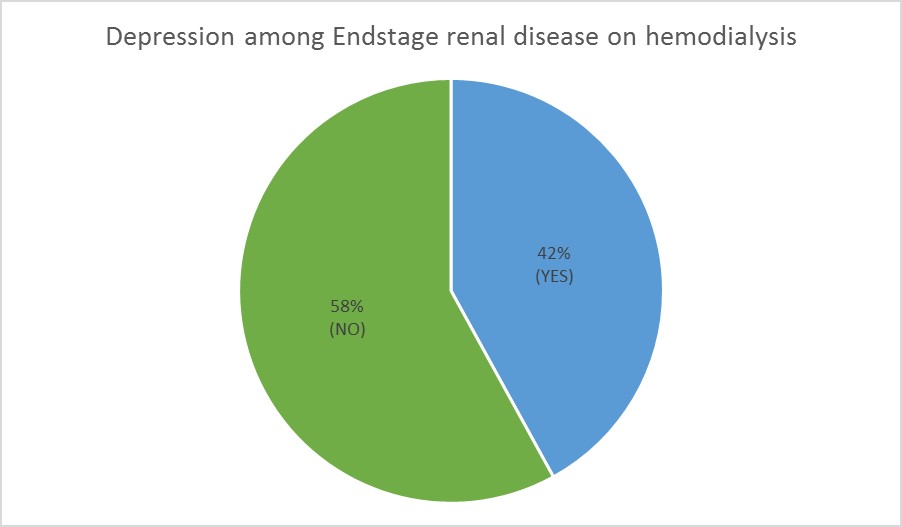
Figure 1: Depression among end stage renal diseases on hemodialysis
Table I: Association of depression with demographics |
|||
Demographics |
n (%) |
p-value |
|
Age groups |
25-35 years |
10 (19%) |
0.99 |
36-45 years |
12 (23%) |
||
46-55 years |
15 (28%) |
||
56-65 years |
16 (30%) |
||
Gender |
Male |
33 (62%) |
0.94 |
Female |
20 (38%) |
||
Socioeconomic status |
Lower class |
35 (66%) |
0.001 |
Middle class |
12 (22.7%) |
||
Upper class |
6 (11.3%) |
||
Dialysis frequency |
≤ 2/wk |
13 (24.5%) |
0.037 |
≥2/wk |
40 (75.5%) |
||
Duration of dialysis |
1-2 years |
15(28%) |
0.0002 |
3-4 years |
18(34%) |
||
5-6 years |
20(38%) |
||
The presence of chronic kidney disease (CKD) leads to a gradual deterioration of kidney function and premature death, constituting a progressive condition. The prognosis associated with CKD can inflict significant psychological strain on those affected, causing considerable distress8. The objective of this study was to investigate the frequency of depression within our population and assess how various psychosocial factors contribute to the development of depression.
The results of this study suggest that depression is prevalent among patients with end stage renal disease on hemodialysis. Among the 126 patients analyzed, 42% were found to have depression based on the Beck Depression Inventory (BDI) score. The finding that depression is prevalent among patients with CKD is consistent with previous studies. A meta-analysis by Palmer et al.,5 found that the prevalence of depression among patients with CKD ranges between 20% to 50%, depending on the diagnostic criteria used. Similarly, a study by Farishta et al.,9 found that the prevalence of depression among patients with end-stage renal disease (ESRD) was 32.2%, while another study by Gupta et al.,10 found a prevalence of major depression of about 44%.
The study also found that depression was more common among poor patients, and had a higher frequency of dialysis. In our study, among depressed patients 35 (66%) were from a lower class, 12 (22.7%) were from the middle class, and 6 (11.7%) were from the upper class. Regarding the frequency of dialysis, among depressed patients, 13 (24.5%) were dialyzing twice or less per week while 40 (75.5%) were dialyzing more than twice per week. These findings are statistically significant with a p-value of >0.05 and also consistent with previous studies that have identified socio-economic status and the frequency of dialysis as risk factors for depression among patients with CKD. For example, a study by Kunwar et al11 found that patients with lower socioeconomic status were more likely to have depression. Other studies by Shanmukham et al.,12 and Kokoszka et al.,13 found that a higher frequency of dialysis was associated with a higher risk of depression.
It is worth noting that the study didn’t found any significant differences in the prevalence of depression among patients of different ages and genders. This finding is somewhat surprising given that previous studies have identified gender and age as risk factors for depression in the general population.6,9,14,15 However, it is possible that the small sample size of the study limited its ability to detect such differences. Duration on dialysis is another factor that contributes to depression in a dialysis patient. In our study among depressed patients, 15(28%) were on dialysis from less than 2 years, 18(34%) were on dialysis from 3-4 years, 20 (38%) were on dialysis from 5-6 years. This finding was statistically significant with a p-value of <0.05 and consistent with the previous study by Elkheir et al.7
It is important to note that depression is a prevalent comorbidity among patients with CKD, is associated with adverse outcomes,16,17 including increased morbidity and mortality, decreased life quality, and high healthcare costs. Therefore, early detection and management of depression are essential in improving patient outcomes in CKD.18
In conclusion, this study adds to the growing body of literature on depression among patients with CKD. The finding that depression is more common among patients who are illiterate, poor, and have a higher frequency of dialysis underscores the importance of addressing socio-economic factors in the management of CKD. Clinicians should be aware of the high prevalence of depression among their patients with CKD and consider screening for depression as part of routine care.
- Ammirati AL. Chronic Kidney Disease. Rev Assoc Med Bras (1992). 2020 Jan 13;66(Suppl 1):s03-s09 https://doi.org/10.1590/1806-9282.66.S1.3.
- Hawamdeh S, Almari AM, Almutairi AS, Dator WLT. Determinants and prevalence of depression in patients with chronic renal disease, and their caregivers. Int J Nephrol Renovasc Dis. 2017;10:183-189. https://doi.org/10.2147/IJNRD.S139652.
- Bains N, Abdijadid S. Major Depressive Disorder [Internet]. PubMed. Treasure Island (FL): StatPearls Publishing; 2021. Available from: https://pubmed.ncbi.nlm.nih.gov/32644504
- Munisi H, Sylvester I, Mwakalebela I, Kanenda S, Rudovick L, Mwita M, Nyanza E. Depression and chronic kidney disease: a cross-sectional study based at Bugando Medical Centre, Northwestern Tanzania. Pan Afr Med J. 2022;42:297. https://doi.org/10.11604/pamj.2022.42.297.31414
- Palmer S, Vecchio M, Craig JC, Tonelli M, Johnson DW, Nicolucci A, Pellegrini F, Saglimbene V, Logroscino G, Fishbane S, Strippoli GF. Prevalence of depression in chronic kidney disease: systematic review and meta-analysis of observational studies. Kidney Int. 2013;84(1):179-91. https://doi.org/ 10.1038/ki.2013.77..
- Wang WL, Liang S, Zhu FL, Liu JQ, Wang SY, Chen XM, Cai GY. The prevalence of depression and the association between depression and kidney function and health-related quality of life in elderly patients with chronic kidney disease: a multicenter cross-sectional study. Clin Interv Aging. 2019;14:905-913. https://doi.org/ 10.2147/CIA.S203186
- Elkheir HK, Wagaella AS, Badi S, Khalil A, Elzubair TH, Khalil A, Ahmed MH. Prevalence and risk factors of depressive symptoms among dialysis patients with end-stage renal disease (ESRD) in Khartoum, Sudan: A cross-sectional study. J Family Med Prim Care. 2020;9(7):3639-3643. https://doi.org/ 10.4103/jfmpc.jfmpc_1229_19.
- Jesus NM, Souza GF, Mendes-Rodrigues C, Almeida Neto OP, Rodrigues DDM, Cunha CM. Quality of life of individuals with chronic kidney disease on dialysis. J Bras Nefrol. 2019;41(3):364-374. https://doi.org/ 10.1590/2175-8239-JBN-2018-0152
- Farishta S, Khan A, Amin S, Ahmad S, Khan MSA, Ahmed W, Bano R. Prevalence of Depression and Anxiety in Chronic Kidney Disease Patients on Hemodialysis. Pakistan Journal of Medical & Health Sciences. 2022; 16(9):403-405. https://doi.org/10.53350/pjmhs22169403.
- Gupta S, Patil NM, Karishetti M, Tekkalaki BV. Prevalence and clinical correlates of depression in chronic kidney disease patients in a tertiary care hospital. Indian J Psychiatry.2018;60(4):485488. http://doi:10.4103/psychiatryIndianJPsychiatry_272.
- Kunwar D, Kunwar R, Shrestha B, Amatya R, Risal A. Depression and Quality of Life among the Chronic Kidney Disease Patients. J Nepal Health Res Counc. 2020;18(3):459-465. https://doi.org/10.33314/jnhrc.v18i3.2556.
- Shanmukham B, Varman M, Subbarayan S, Sakthivadivel V, Kaliappan A, Gaur A, Jyothi L. Depression in Patients on Hemodialysis: A Dilapidated Facet. Cureus. 2022;14(9):e29077. https://doi.org/ 10.7759/cureus.29077.
- Kokoszka A, Leszczyńska K, Radzio R, Daniewska D, Łukasiewicz A, Orzechowski WM et al. Prevalence of depressive and anxiety disorders in dialysis patients with chronic kidney disease. Archives of Psychiatry and Psychotherapy. 2016;18(1):8-13. https://doi.org/10.12740/APP/61977
- Mosleh H, Alenezi M, Al Johani S, Alsani A, Fairaq G, Bedaiwi R. Prevalence and Factors of Anxiety and Depression in Chronic Kidney Disease Patients Undergoing Hemodialysis: A Cross-sectional Single-Center Study in Saudi Arabia. Cureus. 2020;12(1):e6668. https://doi.org/10.7759/cureus.6668
- Kim JW, Moon SJ, Kim HJ, Lee DG. Relationship between Chronic Kidney Disease and Depression in Elderly Koreans Using the 2013 Korea National Health and Nutrition Examination Survey Data. Korean J Fam Med. 2017;38(3):156-162. https://doi.org/10.4082/kjfm.2017.38.3.156.
- Loosman WL, Rottier MA, Honig A, Siegert CE. Association of depressive and anxiety symptoms with adverse events in Dutch chronic kidney disease patients: a prospective cohort study. BMC Nephrol. 2015;16:155. https://doi.org/10.1186/s12882-015-0149-7
- Shirazian S, Grant CD, Aina O, Mattana J, Khorassani F, Ricardo AC. Depression in Chronic Kidney Disease and End-Stage Renal Disease: Similarities and Differences in Diagnosis, Epidemiology, and Management. Kidney Int Rep. 2016;2(1):94-107. https://doi.org/10.1016/j.ekir.2016.09.005.
- Goh ZS, Griva K. Anxiety and depression in patients with end-stage renal disease: impact and management challenges - a narrative review. Int J Nephrol Renovasc Dis. 2018;11:93-102. https://doi.org/10.2147/IJNRD.S126615

An Official Publication of
Islamabad Medical & Dental College
Volume 13 Issue 1
Address of Correspondence
Irfan Mirza
Email:
draganfire2005@yahoo.com
Authors’ Contribution: 1,2Conception; Literature research; manuscript design and drafting; 2,3 Critical analysis and manuscript review; 3,4Data analysis; Manuscript Editing.
Cite this article. Rehman A, Mirza I, Ullah A, Rashid T. The Frequency of Depression Among Patients with Chronic Kidney Disease on Hemodialysis. J Islamabad Med Dental Coll. 2024; 13(1): 49-53. DOI: https://doi.org/10.35787/jimdc.v13i1.1006